When the Smoke Clears: How Smart Seasoning Can Pull a Dish Back from the Brink
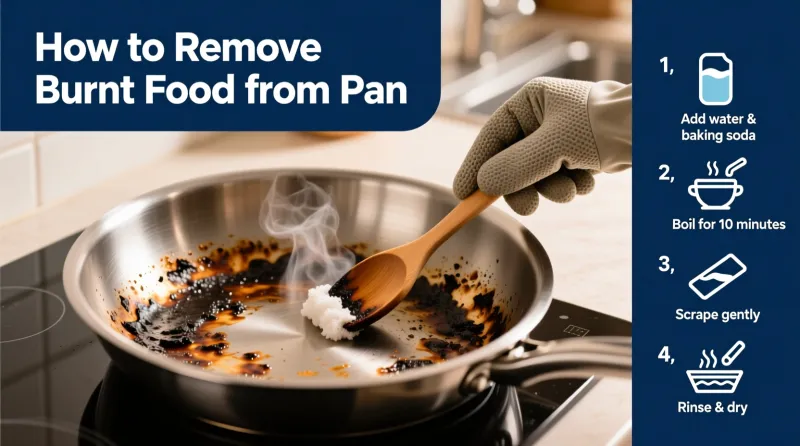
Photo: chef rescuing burnt food in kitchen with salt and seasoning, via s.alicdn.com
It happens to everyone. You step away for two minutes — maybe the dog needed out, maybe your phone buzzed — and suddenly the kitchen smells like a campfire, your sauce looks wrong, and the dish you were genuinely excited about is now... a situation. Before you give up entirely, take a breath. Professional cooks have been rescuing imperfect food for centuries, and a lot of their best tricks come down to one thing: knowing how to use salt strategically.
This isn't about masking failure. It's about understanding what went wrong at a molecular level and using seasoning as a precision tool to bring a dish back into balance. Let's break it down.
Why Salt Is a Rescue Tool, Not Just a Seasoning Agent
Most home cooks think of salt as something you add at the beginning or sprinkle at the end. But in professional kitchens, salt is treated more like a dial — something you adjust in real time as a dish evolves. That's because salt doesn't just add flavor. It suppresses bitterness, enhances sweetness, amplifies aroma compounds, and fundamentally changes how your brain perceives what's in the bowl.
When something goes wrong — whether it's scorched, overseasoned, underseasoned, or just flat — salt (and the way you use it) can often tip the balance back toward edible, sometimes even toward great.
Rescue Scenario 1: The Burnt Bottom
You scorched a soup, stew, or sauce. The bottom of the pot is dark, and the whole thing smells faintly of char. First rule: do not stir. Transfer the top portion carefully into a clean pot, leaving the burnt layer behind.
Now taste it. If there's a bitter, smoky edge running through the dish, you're dealing with Maillard reaction byproducts that have crossed from caramelized into acrid. Here's where a flaky finishing salt — something like a good Maldon-style sea salt or a smoked fleur de sel — can actually work in your favor. A small pinch of smoked salt leans into the char rather than fighting it, shifting the flavor profile from "burnt accident" to "intentionally smoky."
Pair that with a tiny bit of acid — a squeeze of lemon or a splash of vinegar — and you've created contrast that distracts the palate from the mistake. It sounds counterintuitive, but it works.
Rescue Scenario 2: Way Too Salty
This one feels unforgivable, but it's actually one of the more fixable disasters. You over-salted the pasta sauce, the chili, the braising liquid — whatever it is, it tastes like the ocean in the worst way.
The classic fix is to add a starchy, unsalted element: a raw potato chunk (yes, this actually helps absorb some sodium if you simmer it long enough), cooked unsalted rice stirred in and then removed, or simply diluting with unsalted broth or water and then reducing back down.
But here's the less obvious move: acid and fat. A splash of cream, a knob of butter, or a drizzle of good olive oil coats the palate and softens the perception of saltiness. A squeeze of citrus adds brightness that pulls attention away from the salt. You're not removing sodium — you're redirecting the tasting experience.
Going forward, swapping in a mineral-rich specialty salt like a pink Himalayan or a Hawaiian red alaea salt can help you season with more nuance. These salts have lower sodium density by volume compared to fine table salt, which makes it harder to accidentally blow past the threshold.
Rescue Scenario 3: Flat, Lifeless, Just... Boring
Sometimes nothing is technically wrong — the dish just has no personality. It's cooked through, it's safe, but it tastes like effort without reward. This is actually where specialty salts shine the most.
A finishing salt with distinct mineral character — think fleur de sel with its subtle briny complexity, or a black lava salt with its activated charcoal edge — can add a final layer of dimension that transforms a flat dish into something that actually makes people stop and ask what you did differently.
The key is application. Don't stir finishing salt in. Add it on top, right before serving, so it hits the palate first and creates textural contrast. The crunch alone signals to your brain that something intentional is happening.
Rescue Scenario 4: The Bitter Vegetable Situation
Overcooked Brussels sprouts, bitter eggplant, aggressive radicchio in a salad that's fighting back — bitterness is one of the trickiest off-notes to manage. Salt is one of the few flavor agents that literally suppresses bitter taste receptors. It's not folklore; it's basic sensory science.
A pinch of fine sea salt dissolved directly into a bitter dish — or used as a pre-treatment on raw vegetables before cooking — can significantly mellow the edge. For already-cooked bitter greens, a light sprinkle of a flaky salt and a drizzle of something sweet (honey, balsamic glaze) creates a three-way contrast that makes the bitterness feel intentional rather than accidental.
When to Know It's Actually Over
Honesty matters here. Not every dish can be saved, and chasing a rescue can sometimes make things worse. If the protein is dry and overcooked to the point of being rubbery, no amount of finishing salt will fix the texture — though a good sauce and a flaky garnish can at least make it palatable. If mold, spoilage, or true burning (not just browning) is involved, the call is clear.
The real skill isn't just the rescue — it's triage. Taste first. Identify the specific problem. Then reach for the right tool.
Building a Rescue-Ready Salt Collection
If kitchen disasters have taught you anything, it's that having options matters. A well-stocked salt shelf gives you flexibility in the moment rather than forcing you to improvise with whatever's on the counter.
At minimum, consider keeping:
- A fine sea salt for in-cooking adjustments
- A flaky finishing salt for that final punch of texture and flavor
- A smoked salt for leaning into char or adding depth to flat dishes
- A mineral-rich specialty salt (Hawaiian, Himalayan, or similar) for nuanced seasoning that's harder to overdo
At Salt Shaq, we think about salt the way a carpenter thinks about tools — you want the right one for the job, not just the closest one. When things go sideways in the kitchen, that variety is what turns a near-disaster into a dinner worth talking about.
So next time the smoke alarm goes off, don't panic. Reach for the salt — the right salt — and see what you can do.