Does Fancy Salt Go Bad? The Shelf Life Truth Every Serious Cook Needs to Hear

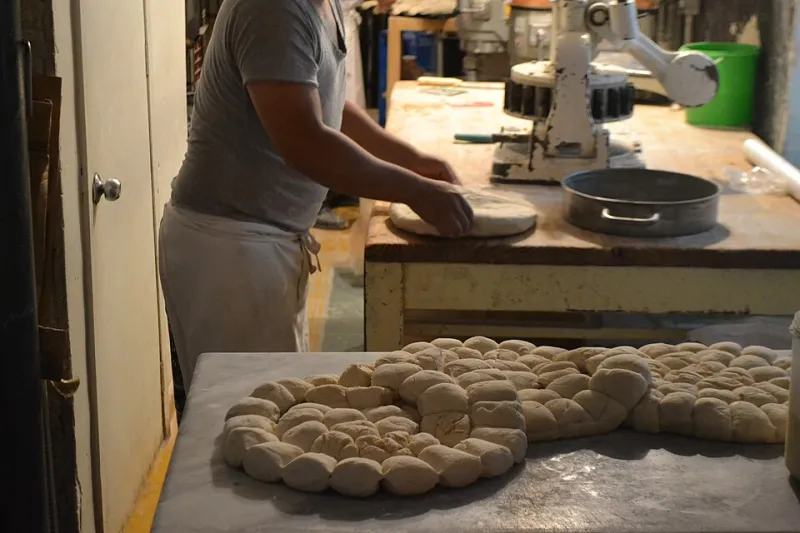
Photo: Nationwide Specialty Co., Arlington, Texas, Public domain, via Wikimedia Commons
Here's a question that doesn't get asked nearly enough: when did you buy that jar of finishing salt sitting on your counter? If the answer is somewhere in the neighborhood of "a while ago" or "I honestly can't remember," you might be seasoning your food with something that's quietly lost most of what made it special in the first place.
Salt gets a reputation as the immortal pantry staple — and pure sodium chloride, technically speaking, doesn't expire. But specialty salts are a different story. The infused varieties, the smoked options, the carefully harvested sea salts loaded with trace minerals and natural moisture — these are products that exist on a spectrum of freshness. And once you understand that spectrum, you'll start treating your salt collection with the same respect you give your olive oil or your dried spices.
Why Specialty Salts Aren't Just Salt
The magic in a high-quality finishing salt isn't just sodium. It's texture, mineral complexity, and in many cases, added flavor from smoke, herbs, citrus, or other infusions. Fleur de sel gets its delicate, slightly briny character from trace minerals and residual moisture that give it that tender, almost flaky crunch. Smoked salts carry volatile aromatic compounds from the smoking process. Infused salts — think truffle salt or chili-lime blends — rely on organic matter that absolutely degrades over time.
When any of those extra elements break down, you're left with something that tastes flat, one-dimensional, or just plain off. The sodium is still there doing its job, but everything else that justified the price tag? Gone.
The Three Enemies Living in Your Kitchen
Three environmental factors are responsible for most specialty salt degradation, and the frustrating part is that they're everywhere in a typical American kitchen.
Humidity is the biggest offender. Salt is hygroscopic, meaning it pulls moisture from the surrounding air. In a humid environment — near a stove, next to the sink, or just in a kitchen that gets steamy during cooking — salt absorbs that moisture and clumps. More importantly, absorbed moisture can trigger oxidation in infused or smoked salts, accelerating flavor loss significantly.
Light exposure does quiet, consistent damage over time. UV rays break down the aromatic compounds in smoked and infused salts, and even indirect natural light can dull a salt's character over months. That pretty glass jar on the windowsill might look great, but it's working against you.
Air contact is the third culprit. Every time you open a container, you're introducing fresh oxygen and ambient humidity. For plain sea salt, that's barely a concern. For a salt that's been blended with dried herbs or infused with citrus zest, repeated air exposure gradually strips away the top notes that make it interesting.
Signs Your Salt Has Passed Its Prime
You don't need a lab to figure out if a specialty salt is still worth using. Your senses are the best tools you have.
Smell it first. A smoked salt should have a distinct, woodsy, savory aroma. A citrus-infused salt should smell bright and fresh. If you open the container and smell basically nothing, that's your answer. Infused salts that have lost their scent have almost certainly lost their flavor too.
Look at the texture. Fleur de sel and other delicate sea salts should have a light, almost feathery structure. If yours has compressed into a dense, damp brick or gone powdery and uniform when it shouldn't be, moisture has done its damage.
Taste a tiny pinch on its own. This is the most direct test. Sprinkle a few grains on the back of your hand and taste them. A good finishing salt should have dimension — a little brininess, maybe some mineral complexity, a lingering flavor. If all you're getting is flat saltiness, it's time to move on.
Storage That Actually Protects Your Investment
The good news is that proper storage can dramatically extend the useful life of even the most delicate specialty salts. Here's what actually works:
Go airtight and opaque. Ceramic crocks with tight-fitting lids are ideal. Dark glass jars work well too. Avoid clear glass containers left out in the open, and definitely skip the open pinch bowls for anything other than what you'll use up in a week or two.
Keep heat and steam away. The spot right next to your stove is convenient but brutal on salt quality. A cabinet shelf away from heat sources — even a cool spot on the counter that doesn't get cooking steam — makes a real difference.
Buy in reasonable quantities. It's tempting to stock up when you find a salt you love, but buying more than you'll use in six to twelve months for infused or smoked varieties is often a waste. Plain sea salts and mineral-rich salts like Himalayan pink are more forgiving and can last significantly longer under good storage conditions.
Label your containers. It sounds fussy, but a small piece of tape with a purchase date takes ten seconds and saves you from the "when did I buy this?" guessing game.
The Cost-Benefit Reality of Replacing Salt
Let's talk dollars for a second. A quality finishing salt might run you anywhere from five to twenty dollars for a few ounces. That's not a trivial amount, but it's also not a mortgage payment. The real waste isn't in replacing a salt that's gone flat — it's in continuing to use a degraded product on food you care about.
Think about it this way: if you're finishing a beautifully seared steak or a fresh summer tomato salad with a smoked salt that's lost its smoke, you're getting zero return on that premium ingredient. You might as well be using table salt at a fraction of the cost. The specialty salt isn't elevating anything at that point — it's just adding sodium.
A rough replacement guide that works for most home cooks:
- Infused and smoked salts: 6 to 12 months after opening, depending on storage conditions
- Delicate sea salts (fleur de sel, sel gris): 1 to 2 years if stored properly, though freshness matters
- Mineral salts (Himalayan, black lava): 2 to 3 years with good storage; these are the most stable of the specialty options
Getting More Out of Every Jar
One habit worth building: do a quick pantry audit every few months. Pull out your specialty salts, smell them, look at them, taste them. It takes five minutes and keeps you honest about what's actually contributing to your cooking versus what's just taking up space.
And when you do replace something, consider it an opportunity rather than a loss. Salt trends move, new producers are always emerging, and rotating your collection means you're always working with something at peak freshness. That's not wasteful — that's cooking smart.
At Salt Shaq, we're big believers that premium ingredients deserve to be treated like the real tools they are. A great salt at the end of its useful life isn't a great salt anymore. Know when to let go, store what you have well, and your food will show the difference every single time.