Not All Salt Belongs in Your Brine: The Pickling Science Every Home Preserver Needs to Know
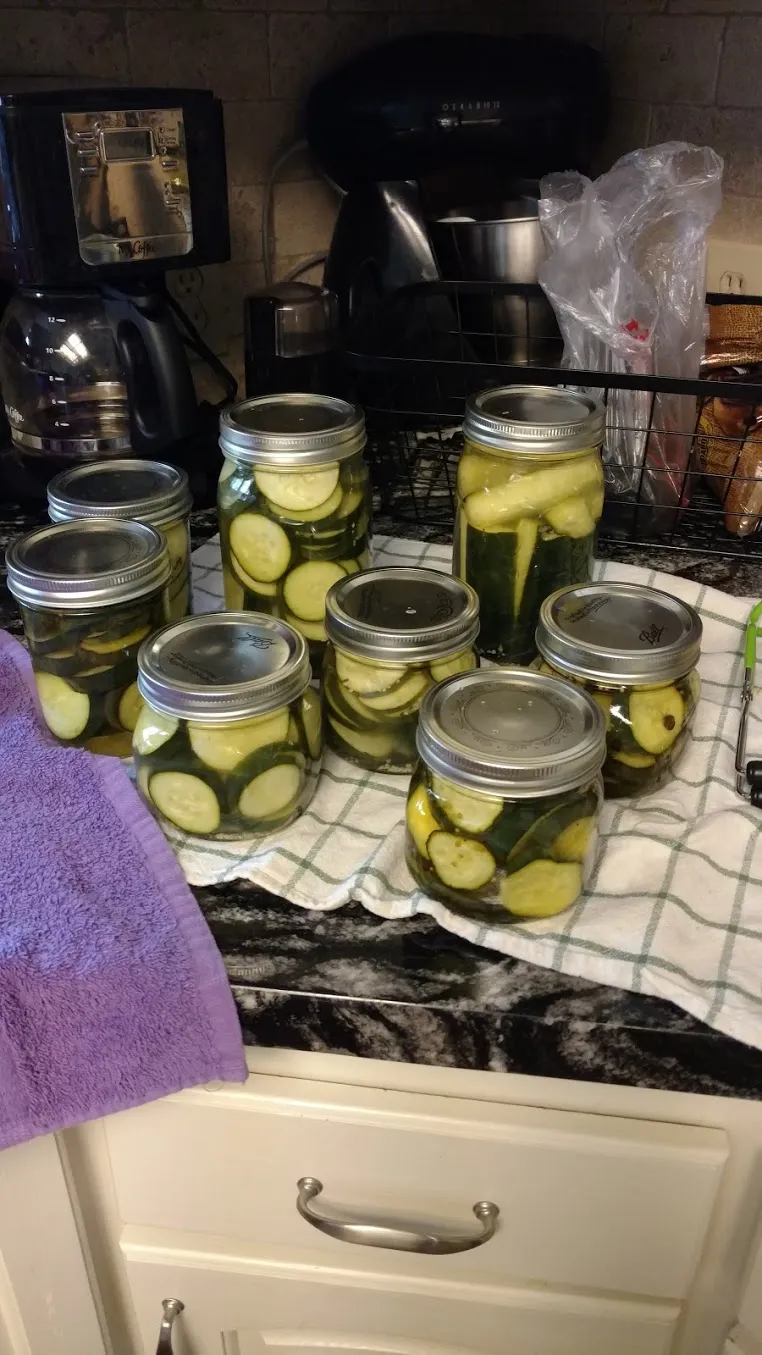
Photo: Amerzduke, CC BY-SA 4.0, via Wikimedia Commons
Every summer, millions of American home cooks pack jars with cucumbers, peppers, green beans, and whatever else came out of the garden — and a whole lot of them reach for the blue Morton canister sitting next to the stove. It's salt. Salt is salt, right?
Not even close.
When it comes to pickling, curing, and fermentation, the type of salt you use isn't just a preference — it's chemistry. And using the wrong one can mean cloudy brine, failed ferments, and vegetables with a texture closer to wet cardboard than a satisfying crunch. Let's break down exactly what's going on inside that jar, and why your salt choice matters more than you probably think.
The Hidden Ingredients in Your Everyday Table Salt
Standard table salt — the stuff in the cylinder with the girl and the umbrella — is not just sodium chloride. It contains two additives that seem harmless in a shaker but can seriously mess with preservation projects.
The first is iodine. Added to table salt since the 1920s to prevent iodine deficiency, it's genuinely important for public health. But iodine is also an antimicrobial agent. That's a problem when you're trying to ferment vegetables, because fermentation depends on cultivating the right bacteria — specifically lactobacillus strains that convert sugars into lactic acid. Iodine doesn't discriminate. It can suppress or kill those beneficial microbes, resulting in a slow, incomplete, or failed ferment. You might open your crock after two weeks expecting tangy sauerkraut and find something that smells vaguely wrong and never quite got there.
The second culprit is anti-caking agents, typically sodium aluminosilicate or calcium silicate. These compounds keep salt free-flowing in humid conditions — great for your shaker, bad for your brine. They don't dissolve fully in liquid, and they can make your pickling brine go cloudy. Technically the pickles might still be safe to eat, but cloudy brine is visually unappealing and can also be a sign that something in the fermentation process went sideways. It's hard to tell the difference at a glance, which is the last thing you want when you're trying to gauge whether a jar of preserved food is actually safe.
What Pickling Salt Actually Is
Pickling salt — sometimes labeled as canning salt — is pure sodium chloride. No iodine, no anti-caking agents, nothing else. It's typically ground finer than kosher salt, which helps it dissolve quickly and evenly in cold brine without any cloudiness. That's really the whole secret. It's not some exotic, highly processed product. It's just salt that hasn't had anything added to it.
Because of the fine grind, measurement matters. Pickling salt is denser than kosher salt, so if a recipe calls for pickling salt and you substitute kosher, you'll need to adjust by volume. Generally speaking, 1 tablespoon of pickling salt is roughly equivalent to 1½ tablespoons of Diamond Crystal kosher salt or about 1¼ tablespoons of Morton kosher salt. Always check your recipe and adjust accordingly — under-salting a ferment can create conditions where the wrong bacteria thrive.
Where Specialty Salts Fit Into the Preservation Picture
So what about the rest of your salt cabinet? Here's where it gets interesting.
Kosher salt is a solid substitute for most pickling projects, as long as it's additive-free (check the label — some brands add anti-caking agents). Its larger crystals dissolve a bit more slowly, so dissolving it in warm water before adding vegetables is a good move. It works well for quick-pickled vegetables and refrigerator pickles where you're not relying on active fermentation.
Sea salt is another option, but it comes with caveats. Unrefined sea salts — the kind with visible color or texture from trace minerals — can introduce mineral compounds that affect flavor and, in some cases, brine clarity. For fermentation purists, a clean, refined sea salt without additives is the safer bet. The mineral-rich stuff is better saved for finishing.
Himalayan pink salt has become a popular choice among home fermenters who love its aesthetic and mineral content. It does work for fermentation — no iodine, no anti-caking agents in most versions — but the trace minerals can subtly influence flavor over long fermentation periods. For a quick brine pickle, it's fine. For a three-month kimchi project, the results may vary from a neutral salt.
Fleur de sel, flake salts, smoked salts, and other finishing salts have no business in a pickling brine. These are flavor-forward, texture-driven salts designed for the last moment before a dish hits the table. Their irregular crystal structure, moisture content, and in the case of smoked salts, added flavor compounds, make them poor choices for preservation. Save them for what they're actually great at.
Curing Salt Is a Different Animal Entirely
Here's where a lot of confusion kicks in: curing salt — the stuff used to make bacon, corned beef, and cured sausages — is not the same thing as pickling salt, and it is absolutely not interchangeable with any other salt in your cabinet.
Curing salt (often sold under names like Prague Powder or Instacure) contains sodium nitrite or a combination of sodium nitrite and sodium nitrate. These compounds inhibit the growth of Clostridium botulinum, the bacteria responsible for botulism, in low-oxygen environments like the inside of a cured meat. They also contribute to that characteristic pink color and distinctive flavor in cured meats.
Using too much curing salt is dangerous. Using it where it isn't called for is pointless at best and potentially harmful. It's a precise, functional ingredient — not a seasoning. If a recipe calls for curing salt, use curing salt. If it doesn't, keep it out of the mix entirely.
A Quick Reference for Your Next Preservation Project
- Traditional lacto-fermentation (sauerkraut, kimchi, fermented pickles): Use pickling salt or additive-free kosher salt. Avoid iodized salt at all costs.
- Refrigerator pickles and quick brines: Pickling salt or additive-free kosher salt both work well. Sea salt is fine if it's refined and clean.
- Cured meats (bacon, pastrami, salami): Follow the recipe exactly. If it calls for curing salt, that's non-negotiable.
- Dry-brining vegetables before pickling: Pickling salt or kosher salt. Finer grinds draw moisture faster.
- Finishing pickled vegetables before serving: Now you can bring out that fancy flake salt or smoked variety for a little extra something.
The Bigger Picture: Know What's in Your Salt
One of the best habits any serious home cook can develop is reading salt labels. Not because salt is complicated — it's not — but because additives are common, and knowing what you're working with puts you in control. When you're seasoning a steak, a little iodine isn't going to matter. When you're depending on live bacterial cultures to transform a jar of cabbage into something tangy and alive, every ingredient counts.
Building a salt cabinet that includes a dedicated pickling salt alongside your finishing salts, kosher salt, and specialty varieties means you're always reaching for the right tool. It's a small investment that pays off every time you crack open a jar of something you made yourself — clear brine, perfect crunch, exactly the flavor you were going for.
That's what good salt is all about.