Why Your Food Tastes Less Salty the More Salt You Add
You've been there. You taste a pot of soup, it needs something, so you add salt. Taste again — still flat. Add more salt. Still not quite right. By the time the dish actually tastes seasoned, you've dumped in twice what any recipe would call for, and now you're genuinely worried about sodium intake. What went wrong?
Here's the uncomfortable truth: the problem wasn't the food. It was your palate — and the way you were using salt. There's a real, scientifically documented phenomenon happening every time you season this way, and once you understand it, you'll never approach the salt cellar the same way again.
Your Taste Buds Are Built to Tune Out
The human sensory system is wired for change, not for constant stimulation. Your nose stops registering a smell after a few minutes in a room. Your skin stops noticing the weight of your clothes. Your taste buds? Same deal. When you expose them to the same flavor repeatedly — especially a strong one like saltiness — they adapt and the perception of that flavor fades. Scientists call this sensory adaptation or gustatory adaptation, and it's one of the most underappreciated forces in cooking.
What this means practically: every time you taste your food while actively seasoning it, you're accumulating salt exposure. Your sodium-sensitive taste receptors (specifically the ENaC channels, if you want to get nerdy about it) become temporarily desensitized. The signal they send to your brain gets quieter. So you add more salt to compensate for what's actually just a tired palate — not an under-seasoned dish.
This is the salt paradox in its purest form. More salt leads to less perceived saltiness in the moment, which leads to even more salt, which makes the final dish genuinely over-salted once your taste buds recover.
The Mineral Factor Your Fancy Salt Is Hiding
Here's where it gets interesting for anyone who's invested in specialty salts. Not all salt hits your palate the same way, and it's not just about grain size or texture — it's about mineral composition.
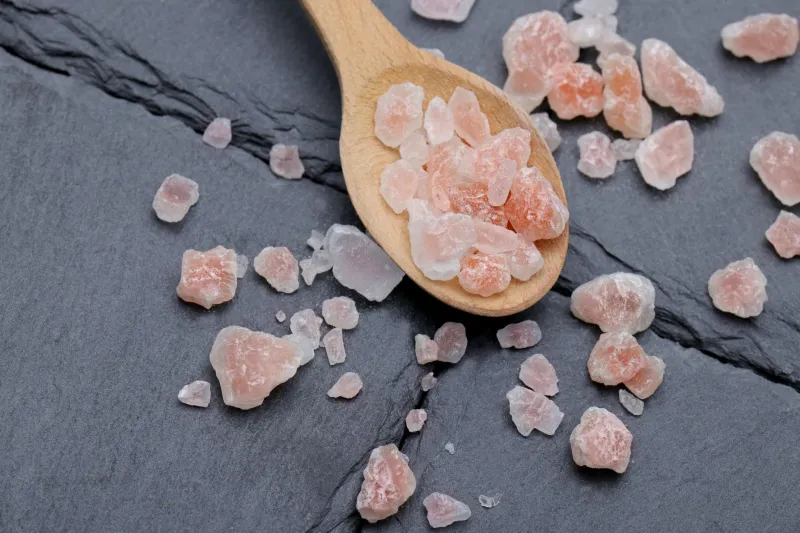
Standard table salt is almost pure sodium chloride, somewhere around 97–99%. Specialty salts — your Himalayan pink, your Maldon sea salt, your fleur de sel — contain varying amounts of calcium, magnesium, potassium, and trace minerals alongside the sodium. These minerals actually compete with sodium chloride for your taste receptors. Some of them, particularly magnesium, can create a slight bitterness that rounds out the sharpness of pure sodium. Others add subtle complexity.
The result? Specialty salts often taste less aggressively salty than table salt even at the same sodium level. This isn't a flaw — it's part of what makes them interesting. But it also means you need to be careful. If you're seasoning with a mineral-rich finishing salt and tasting repeatedly, your palate is adapting to a more complex flavor profile, not just straight sodium. You might under-season thinking the salt is doing its job, or over-season chasing a salty punch that a mineral-heavy product was never going to deliver the same way.
Why Your Finishing Salt Disappears
A lot of home cooks notice that a gorgeous flaky finishing salt — the kind you lovingly pinch over a steak or a bowl of fresh tomatoes — seems to vanish on the palate if they've been cooking and tasting for a while. This is sensory adaptation working against you in real time.
By the time dinner hits the table, you've been tasting, adjusting, and smelling that food for anywhere from 30 minutes to a couple hours. Your palate is genuinely fatigued on the flavors you've been working with. The finishing salt that should provide a bright, clean burst of salinity gets absorbed into a palate that's already adapted to the dish's overall salt level. Guests who haven't been cooking and tasting all evening? They'll taste it. You won't.
This is one of the reasons chefs often have a sous chef or a line cook taste a dish before it goes out. Fresh palate, honest feedback.
How to Season Strategically and Keep Salt Vibrant
The fix isn't to stop salting — it's to salt smarter. A few approaches that actually work:
Salt in stages, not in one big hit. Adding salt at multiple points during cooking — at the start of building a sauce, midway through, and a final adjustment near the end — distributes the sodium throughout the dish and means you're not chasing a big flavor correction at the end when your palate is most fatigued. This is also better for flavor development overall.
Reset your palate between tastes. Plain water helps. A small piece of plain bread works even better. Even a 10-minute break from tasting can let your receptors partially recover. Professional tasters in the food industry use these techniques constantly.
Trust your recipe more, your fatigued palate less. If you've been cooking for an hour and the dish still tastes flat to you, consider that your palate might be the issue before you reach for more salt. Have someone else taste it. Or step away and taste it again in 15 minutes.
Match your salt to the job. Use a consistent, predictable salt — like a fine sea salt — for cooking and seasoning throughout the process. Save your specialty finishing salts for the table, where they'll land on fresh, unadapted palates and actually get to show off. That fleur de sel deserves a fair chance.
Lean on contrast. Salt perception is heightened when it plays against other flavors, particularly acid and fat. A squeeze of lemon or a splash of vinegar can make a dish taste more seasoned without adding a single extra grain of salt. This isn't a workaround — it's how professional kitchens actually operate.
The Bigger Picture
Understanding the salt paradox changes your relationship with seasoning at a pretty fundamental level. You stop treating salt as something you add until the food tastes salty enough, and you start treating it as something you build thoughtfully, layer by layer, with an awareness of how your own perception shifts throughout the cooking process.
It also gives you a much better reason to invest in quality. When you're using a genuinely excellent finishing salt — something with real mineral complexity and beautiful texture — and you're using it correctly (at the table, on a fresh palate, as a final flourish), it does something that no amount of table salt shaken over a finished dish ever can. It delivers a clean, bright, multidimensional hit of flavor that lands exactly the way it should.
That's the whole point. Salt isn't just sodium. And seasoning isn't just adding more of it.