Crunch Counts: How Finishing Salt Changes the Way Food Tastes Before You Even Taste It
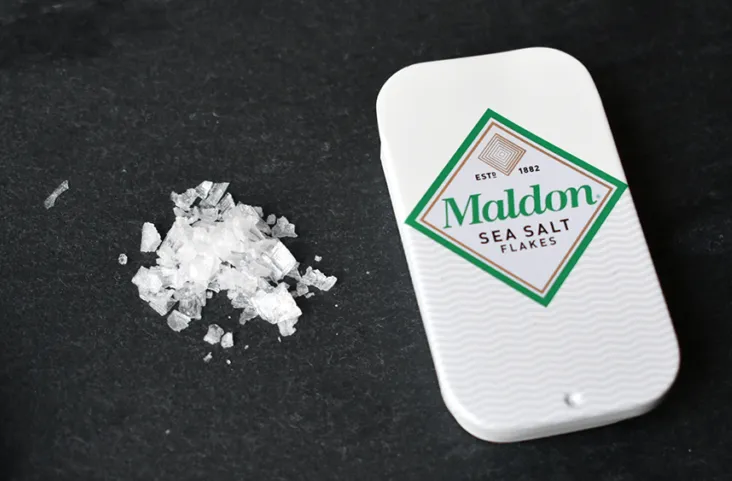
Photo: sousvideguy, CC BY 2.0, via Wikimedia Commons
Two salts can contain the same amount of sodium and still make a dish taste completely different. That sounds like a magic trick, but it is really just texture. A flaky salt shatters between your teeth. A fine salt disappears before you notice it. A coarse grain lingers, dissolves slowly, and keeps seasoning in play longer. None of that changes the chemistry of sodium. All of it changes the experience of eating.
That is why finishing salt deserves a place at the table, not just in the cabinet. It is not a garnish. It is a texture tool, and texture is one of the fastest ways to make everyday food feel more finished.
Same Sodium, Different Sensation
When you bite into food, your brain is already collecting information before flavor arrives. Is it crisp? Creamy? Rough? Slippery? Salt crystals add to that data stream. A flake salt on a steak gives you a tiny crunch, then a burst of salinity, then nothing. A fine salt on the same steak dissolves into the juices and reads as a more even, background seasoning. The sodium level might be similar, but the experience is not.
There is also a timing effect. Fine salt dissolves fast, so it hits the tongue quickly and can taste sharp if you use too much. Coarse salt dissolves slowly, so the seasoning seems to unfold. Flaky salt gives you both: a quick pop of salt on the surface and a little crunch that makes the food feel more substantial.
Crystal Shapes, Translated for the Kitchen
You do not need a geology lecture to use salt well, but a little shape knowledge helps.
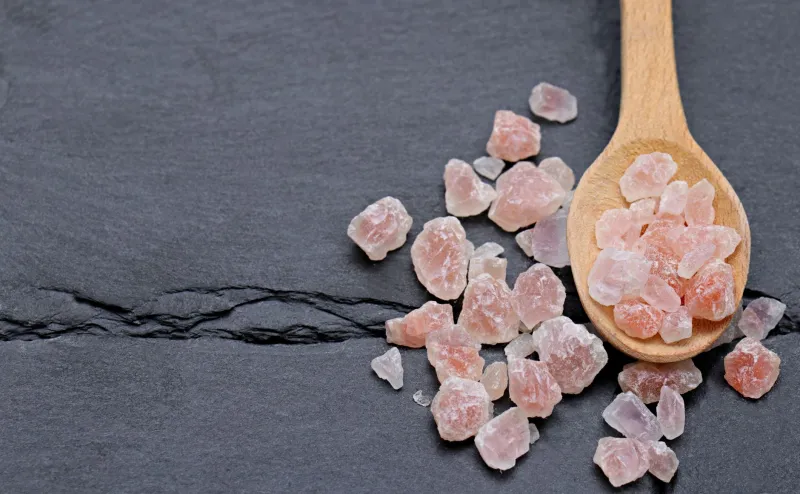
Flaky salt forms in thin, pyramidal flakes. It is light, so a pinch looks like more salt than it is. That makes it forgiving at the table. Use it on foods where you want visible seasoning and a delicate crunch.
Coarse salt has larger, harder grains. It is slower to dissolve, which makes it good for roasting, grilling, and anything that spends time in the oven. It also gives you a wider margin for error because the grains are easy to see and brush off.
Fine salt is the quiet worker. It dissolves into dough, brine, sauce, and water. It is the salt you use when you want seasoning to disappear into the dish rather than sit on top of it.
Smoked salt is its own category. The smoke is a flavor layer, not just a texture layer. Use it where smoke makes sense: roasted vegetables, grilled meats, corn, potatoes, even popcorn. A little goes a long way, and the best versions taste like smoke, not like an ashtray.
When to Add Each Type
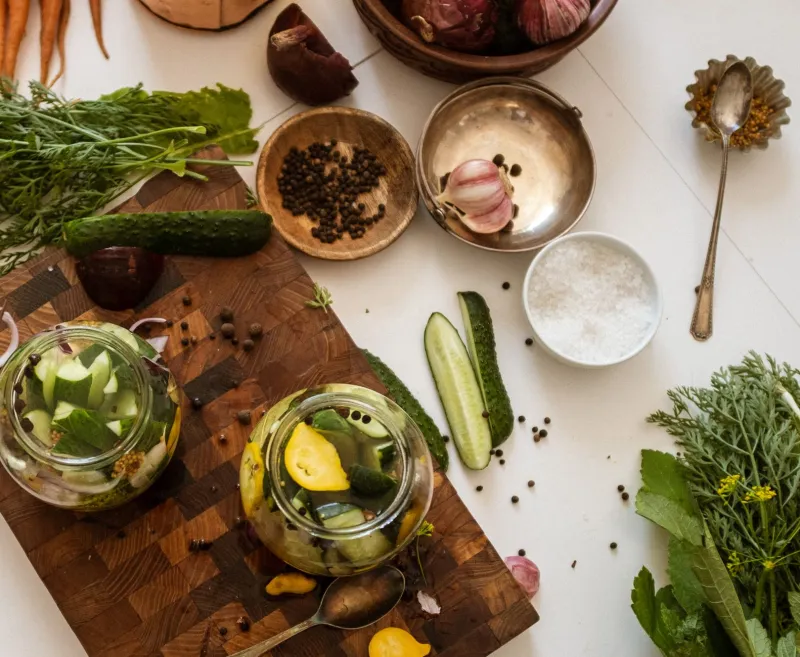
Add fine salt early. Use it in pie dough, bread dough, brines, pasta water, and sauces that will reduce. It has time to distribute evenly, and you can adjust as you go.
Add coarse salt in the middle. Use it on a turkey before roasting, on potatoes before they go into the oven, or on a steak before it hits the grill. The larger grains give you a buffer, and they will partly dissolve as the food cooks.
Add flaky salt at the end. Use it on sliced meat, roasted vegetables, scrambled eggs, avocado toast, tomato slices, baked potatoes, and chocolate chip cookies. The point is the crunch and the visible sparkle. If you add it too early, it dissolves and you lose the whole reason you bought it.
Pairings That Make Sense in an American Kitchen
Start with eggs. A soft scramble with a pinch of flaky salt at the end tastes richer and more seasoned than the same eggs with fine salt stirred in. The flakes land on the surface and give you a little pop instead of a uniform saltiness.
Move to steak. Salt the steak with coarse salt before cooking, then finish the sliced meat with flaky salt at the table. You get deep seasoning and a final crunch. The same trick works on roasted chicken, pork chops, and grilled fish.
Try vegetables. Roasted carrots, Brussels sprouts, and potatoes benefit from a coarse salt before roasting and a flaky salt after. The first salt seasons the interior; the second gives the surface some life. Corn on the cob is another obvious one. Butter, flaky salt, and black pepper is a complete summer meal.
Do not forget dessert. A few flakes of salt on a chocolate chip cookie, brownie, or caramel tart make the sweetness taste brighter. Salted whipped cream is a two-second upgrade. A pinch of fine salt in apple pie filling keeps the fruit from tasting dull.
The Salt Shaq Take
You do not need a dozen salts to cook well. You need three textures: one fine salt for dough and brine, one coarse salt for roasting and grilling, and one flaky salt for finishing. That is the whole system. Everything else is a bonus.
Keep the flaky salt in a small bowl at the table. If it is visible, you will use it. And if you use it, you will notice something simple: food tastes more interesting when it has a little texture on top. Crunch is not a garnish. It is part of the seasoning.